
If you want to lower your AC bill this summer, you don’t need a new system — you need a few targeted changes and a properly maintained AC. In Tampa Bay, July and August are when the gap between a well-run home and a neglected one shows up on the electric bill, sometimes by $100 or more per month.
Florida summer AC bills are no joke. In Tampa Bay, the average household runs their air conditioning 8–10 months a year, and for three of those months — June, July, and August — the system barely gets a break. Electric bills routinely hit $200–$350 per month for homes over 1,500 square feet.
The good news: most of that cost is controllable. Here are the highest-impact changes Tampa Bay homeowners can make to lower your AC bill this summer without sacrificing comfort.

1. Set Your Thermostat to 78°F (Not 72°F)
This is the single biggest lever on your electric bill. The U.S. Department of Energy estimates that every degree above 72°F saves 3–5% on cooling costs. In Tampa Bay terms, moving from 72°F to 78°F can save 18–30% on your cooling costs over the summer.
78°F feels uncomfortable if you’re used to 72°F, but give it two weeks. Your body adjusts. The combination of ceiling fans (which add a wind-chill effect without lowering the temperature) and the money you’ll stop spending makes it worthwhile.
The Florida Public Service Commission recommends 78°F when home, 82°F when away, and 85°F when on vacation. That last setting alone can save $30–60 per week.
2. Use a Smart Thermostat Schedule
If you’re not using a programmable or smart thermostat, you’re likely cooling an empty house every weekday between 8 AM and 5 PM. That’s roughly 45 hours per week of full cooling for no occupants.
A basic schedule:
- 6:00 AM — Cool down to 76°F before the household wakes
- 8:30 AM — Setback to 82°F while house is empty
- 4:30 PM — Pre-cool to 78°F before occupants return
- 10:00 PM — Setback to 80°F for sleeping (ceiling fan handles the rest)
Smart thermostats like Ecobee or Google Nest learn your schedule and handle this automatically. They typically pay for themselves in 6–12 months in Florida’s climate.
3. Keep Your AC System Maintained — the Biggest Hidden Driver of a High Summer Bill
A dirty, under-maintained air conditioner is an expensive one. Florida’s heat and near-year-round runtime mean maintenance has a bigger payoff here than anywhere else. Our guide on how often to service your AC in Florida covers the full recommended schedule — but here’s the impact of neglected maintenance on your electric bill:
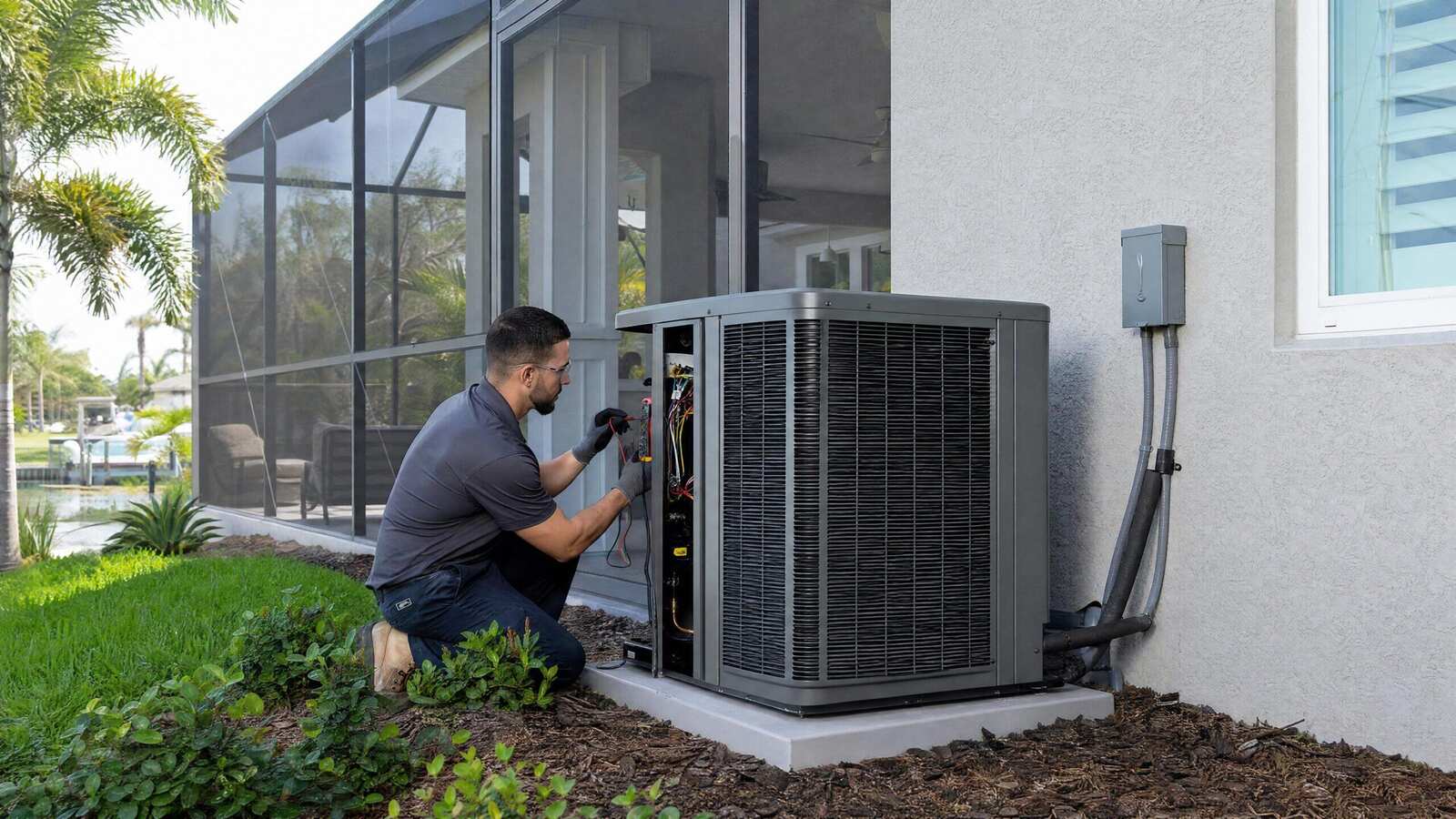
- Dirty air filter: Adds 5–15% to cooling costs by restricting airflow. A $10 filter change is the highest-ROI maintenance you can do. See our Florida AC filter replacement guide for the right change interval and MERV rating for your system.
- Low refrigerant: An undercharged system runs longer cycles to reach the set temperature — sometimes 30–40% longer. If your system runs constantly but your house doesn’t feel cool, call us.
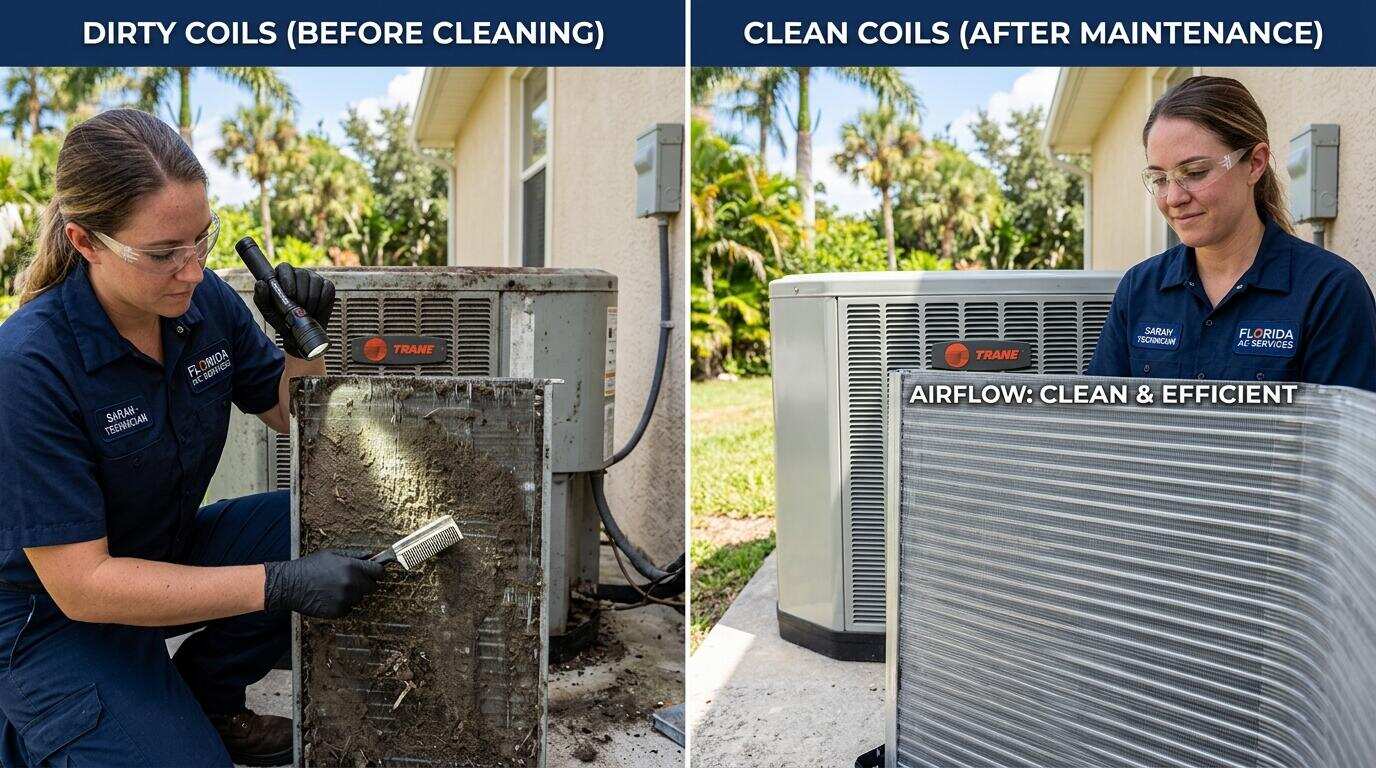
- Dirty condenser coils: The outdoor unit dissipates heat through the condenser coils. When they’re coated with dirt, grass, and debris, heat transfer is impaired — the system works harder and costs more to run.
- Clogged condensate drain: Won’t directly raise your bill, but will shut your system down mid-summer if it backs up.
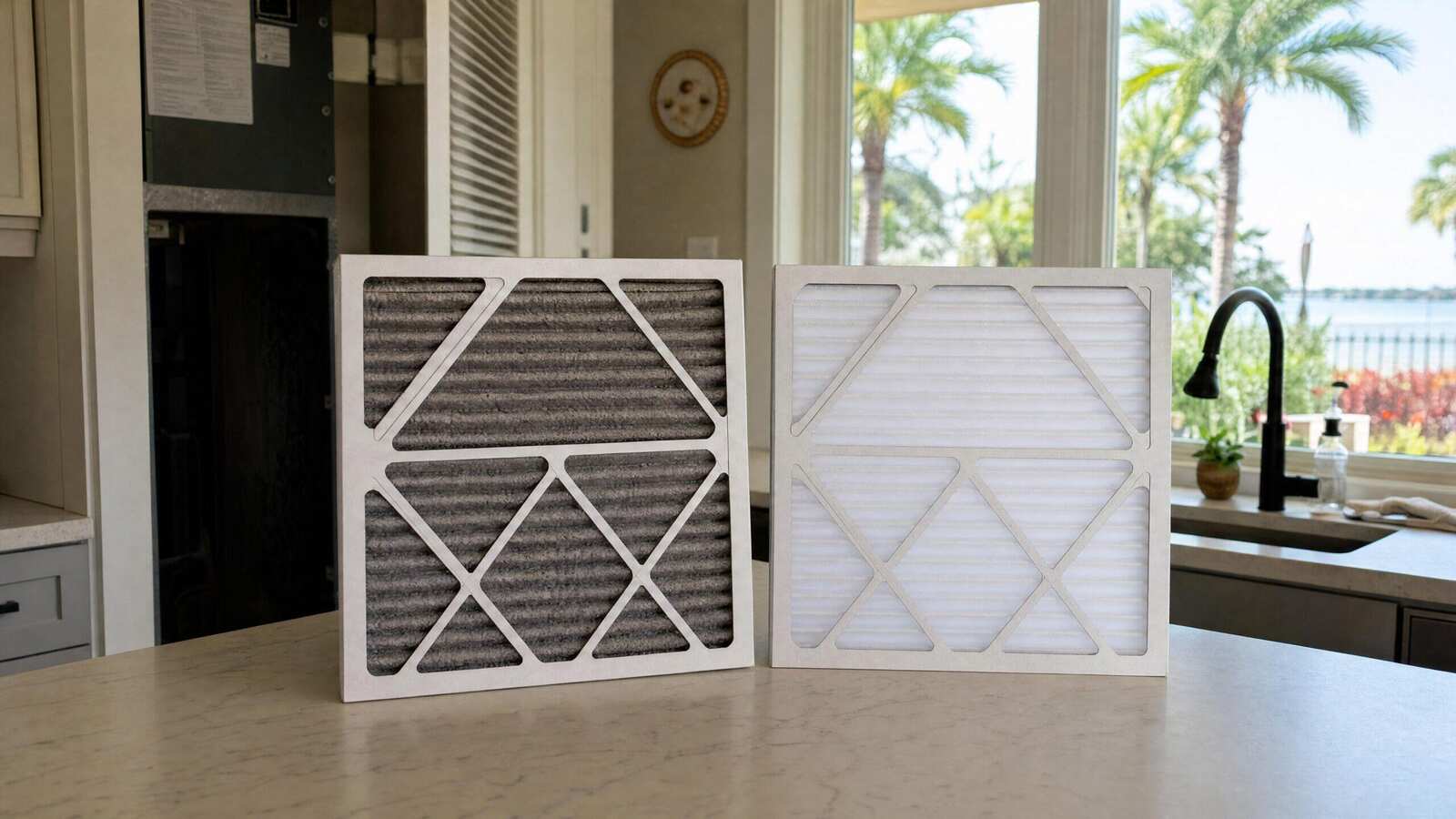
A summer tune-up addresses all of these. Review our AC tune-up checklist for Tampa Bay homeowners so you know exactly what a proper service covers. It’s not just maintenance — it’s an investment in lower monthly bills for the next four months.
4. Seal Your Home Against Heat Gain
Your AC is fighting two battles: heat coming through your walls and roof (conductive heat), and heat coming through windows, doors, and gaps (infiltration). Florida sun is relentless, and a poorly sealed home makes your AC work twice as hard.
High-impact, low-cost steps:
- Window coverings during peak sun hours (10 AM–4 PM): Blackout curtains or reflective blinds on west and south-facing windows can reduce heat gain by 30–45%. This is one of the cheapest cooling upgrades you can make.
- Door sweeps and weatherstripping: Check exterior doors for daylight gaps. A gap under a front door leaks conditioned air constantly. Door sweep kits run $10–20 at hardware stores.
- Attic insulation: Florida attics routinely hit 140–160°F in summer. If your attic insulation is below R-30, adding insulation has a fast payback in this climate.
- Attic ventilation: Ridge vents and soffit vents that allow hot air to escape reduce the heat load on your living space significantly.
5. Reduce Internal Heat Sources
Your AC doesn’t just fight outdoor heat — it fights every heat-generating appliance inside your home. In summer, small habits add up:
- Run your dryer in the evening or early morning, not midday when your AC is already under maximum load.
- Switch to LED bulbs if you haven’t. Incandescent bulbs convert only 10% of energy to light — the other 90% is heat, directly warming your living space.
- Cook outdoors or use the microwave on hot summer days. A conventional oven running for an hour adds significant heat load to your kitchen.
- Check your refrigerator and freezer seals. A refrigerator with a poor door seal runs constantly and generates heat in your kitchen.
6. Use Ceiling Fans the Right Way
Ceiling fans don’t lower air temperature — they create a wind-chill effect on your skin, which makes the room feel 4–8°F cooler. That wind-chill lets you set the thermostat higher without losing comfort.
Critical rules:
- Run fans counterclockwise in summer (looking up at the blades, they should spin counterclockwise to push air down).
- Turn fans off when you leave the room. Fans cool people, not rooms. Running a fan in an empty room wastes electricity.
- In Florida, ceiling fans in every occupied room allow you to raise the thermostat 2–3°F without discomfort. At $0.03–0.05 per hour to run a fan versus the cost of AC cooling, the math is strongly in favor of fans.
7. Check Your Ductwork
In many Florida homes — particularly those built before 2000 — ductwork runs through unconditioned attic space. Leaky ductwork in a 140°F attic means your AC is cooling air that’s immediately being heated before it reaches your living space.
The Department of Energy estimates duct leakage reduces HVAC efficiency by 20–30% in typical Florida homes. If your electric bills seem higher than your neighbors’ with a similar-sized home, duct leakage is often the culprit.
Signs of duct problems:
- Rooms that never get cool no matter what you set the thermostat to
- Unusually high electric bills relative to home size
- System runs for very long cycles without reaching the set temperature
A duct inspection and sealing (or replacement) can pay for itself in 2–3 years in energy savings in Florida’s climate. If you’re also wondering whether it’s time to replace the system itself, see our AC installation cost guide for Tampa Bay for a straight-answer breakdown.
Frequently Asked Questions: How to Lower Your AC Bill This Summer
What is the fastest way to lower your AC bill this summer?
The fastest impact comes from raising your thermostat to 78°F and running ceiling fans in occupied rooms. Combined, these two changes can reduce cooling costs 25–35% with no service call and no upfront cost beyond the thermostat change.
How much can Tampa Bay homeowners realistically save on their AC bill?
Most Tampa Bay homeowners can cut their summer cooling bill by 20–40% through thermostat setback, ceiling fans, window coverings, and a properly maintained AC system. Homes with duct leakage or low refrigerant can save even more after a tune-up.
Does AC maintenance actually lower my electric bill?
Yes. A dirty air filter alone adds 5–15% to cooling costs. Low refrigerant causes run cycles 30–40% longer than they should be. An annual tune-up — coil cleaning, refrigerant check, filter change, drain flush — typically recovers those losses within one or two billing cycles in Florida’s climate.
What temperature should I keep my AC at in summer in Florida?
The Florida Public Service Commission recommends 78°F when home, 82°F when away, and 85°F when on vacation. With ceiling fans running, 78°F is comfortable for most people and significantly cheaper than 72–74°F. Every degree lower costs an additional 3–5% on your bill.
Why is my AC bill so high even with the thermostat set correctly?
The most common causes are a dirty air filter, low refrigerant, dirty condenser coils, or duct leakage. Any one of these can add 20–40% to your cooling costs even when your thermostat setting is right. A Hot 2 Cold tune-up will identify the cause and fix it.
Lower Your AC Bill This Summer: The Bottom Line
Tampa Bay summer electricity costs are high, but not uncontrollable. A few behavior changes — thermostat setback, ceiling fan use, window coverings — combined with a properly maintained AC system can realistically cut your summer cooling bill by 20–40%.
If your system is running constantly, your bills have climbed year over year, or you’re not sure when you last had a tune-up — that’s the fastest path to lower costs. A properly maintained AC system uses energy efficiently. A neglected one doesn’t.
Schedule Your Tune-Up with Hot 2 Cold
We service Riverview, Tampa, Brandon, Apollo Beach, Valrico, Fish Hawk, Bloomingdale, and surrounding Hillsborough County communities. If your AC needs a tune-up, is running poorly, or you want a straight answer on whether repair or replacement makes more financial sense — we’re the call.
Call: (813) 355-9698
Dispatch: 10918 Rodeo Ln, Riverview, FL 33579
Service area: Riverview, Tampa, Brandon, Apollo Beach, Valrico, Fish Hawk, Bloomingdale, and surrounding Hillsborough County communities