
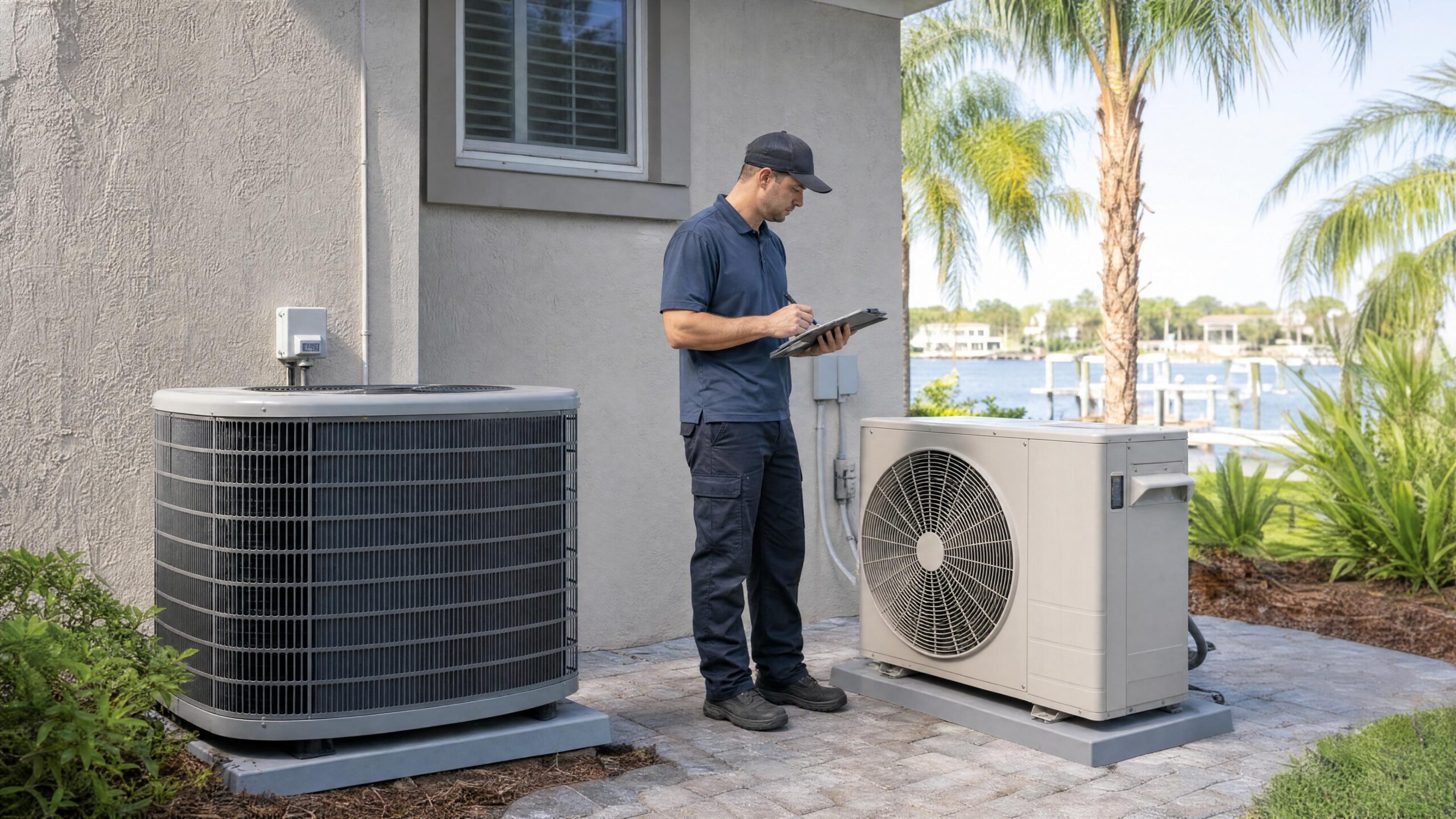
Central AC vs Heat Pump in Florida: Which System Is Right for Your Home?
Choosing Between Central AC and Heat Pump Systems in Florida
Choosing between central AC vs heat pump in Florida is one of the most common decisions Tampa Bay homeowners face before a system replacement. Both can keep your home comfortable year-round, but Florida’s climate — long cooling seasons, mild winters, and high humidity — affects which system makes more sense for your home and budget.
How Florida’s Climate Affects Your HVAC Choice
Florida’s hot, humid summers and mild winters create specific demands for home comfort systems. Most of the year, cooling is the primary concern. Summer temperatures regularly reach the 90s with high humidity, requiring reliable air conditioning from March through October.
For most Tampa Bay homeowners, cooling demand drives the decision far more than heating demand. Cool mornings and passing winter cold fronts still matter, but Florida homes usually spend much more time fighting heat and humidity than running heat for long stretches.
Central Air Conditioning: Cooling-Only Systems
A central air conditioner provides powerful cooling by removing heat from indoor air and transferring it outside. These systems work with a separate furnace or heat strips for winter heating.
How Central AC Works:
- Compressor circulates refrigerant between indoor and outdoor coils
- Indoor air passes over cold evaporator coils
- Heat is expelled outside through the condenser unit
- Cool air distributes through your ductwork
Advantages of Central AC in Florida:
- Maximum cooling capacity for hot summer months
- Proven reliability in extreme heat
- Lower upfront cost when paired with electric or gas heat
- Simpler repair and maintenance in some cases
Limitations:
- Requires separate heating system (furnace or heat strips)
- Less energy-efficient for heating compared to heat pumps
- Higher operating costs if you use heating frequently
Heat Pumps: All-Season Comfort Systems
A heat pump provides both cooling and heating from a single system. Instead of generating heat, it moves heat energy between indoors and outdoors depending on the season.
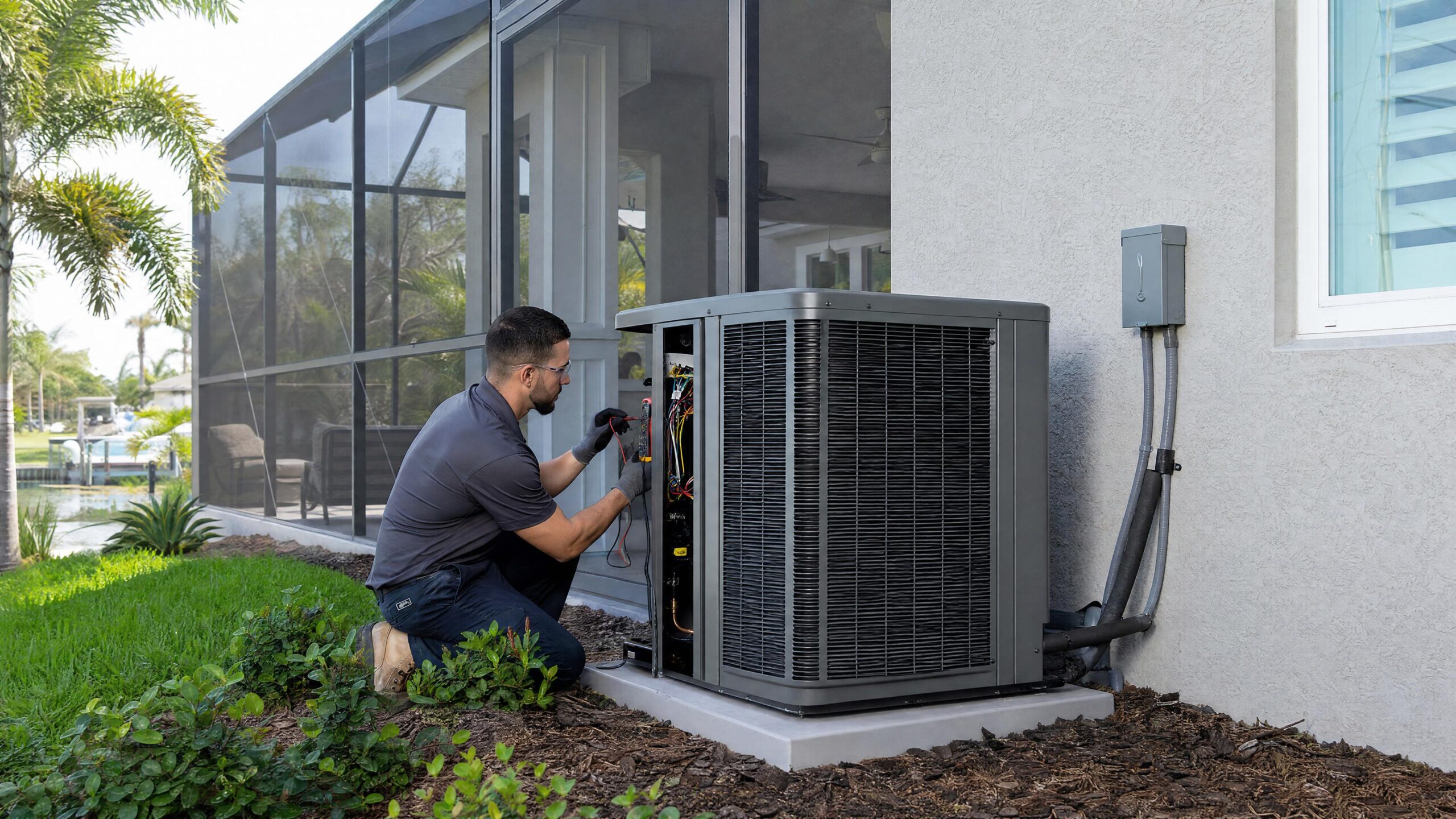
How Heat Pumps Work:
- Summer mode: Removes heat from inside and moves it outdoors (just like AC)
- Winter mode: Extracts heat from outdoor air and moves it inside
- Reversing valve switches between heating and cooling modes
- Same equipment handles both functions
Advantages of Heat Pumps in Florida:
- Energy-efficient heating for mild winters
- Single system for all-season comfort
- Lower operating costs when heating is needed
- Environmentally friendly operation
Limitations:
- Higher upfront cost than AC-only systems
- Correct sizing, airflow, and installation quality matter for year-round comfort
- Backup heat strategy still matters during colder Florida cold snaps
Dual-Fuel Systems: Maximum Efficiency Year-Round
A dual-fuel system combines a heat pump with a gas or electric furnace. The system automatically switches between the heat pump and furnace based on outdoor temperature and efficiency.
How Dual-Fuel Works in Florida:
- Heat pump handles cooling all summer
- Heat pump provides efficient heating on mild winter days
- Backup furnace activates during rare cold snaps
- System chooses the most efficient option automatically
Dual-fuel systems are best for Florida homeowners who want heat-pump efficiency most of the time but still prefer a furnace-style backup plan for colder weather.
Winter Heating Needs in Florida
Florida’s heating season is short compared to the rest of the country, but comfort still matters when overnight temperatures dip and a cold front moves through the Tampa Bay area.
For most homeowners around Riverview, Tampa, Brandon, and nearby communities, the bigger question is not whether you need heat every day. It’s whether you want one system that can handle cooling season plus normal winter comfort without leaning as hard on electric backup heat.
- Cooling still does the heavy lifting for most of the year in Florida homes.
- Heat pumps make sense when you want one system for both seasons and expect to use heat during cool mornings or winter fronts.
- Central AC with separate heat can still be the right fit if your existing heating setup works well or your replacement plan is focused mainly on cooling.
- Backup heat planning still matters if your home gets chilly easily or you want extra protection during colder snaps.
Energy Efficiency Comparison
Both systems cool effectively, but their heating efficiency differs significantly.
Cooling Efficiency
Modern central AC and heat pump systems are compared using SEER2 (Seasonal Energy Efficiency Ratio 2) when you look at current equipment ratings. Similarly matched systems can deliver very similar cooling performance, so installation quality, airflow, humidity control, and sizing usually matter more than the equipment label alone.
In cooling mode, compare the specific SEER2 rating and system design rather than assuming one category automatically outperforms the other.
Heating Efficiency
Heat pumps can be appealing in Florida because they move heat instead of relying entirely on electric resistance heat during normal winter weather. That usually makes them a more efficient way to handle the lighter heating season many Tampa Bay households actually experience.
- Heat pump heating: Often the better fit when you want one system handling both seasons.
- Electric resistance heating: Simple and common, but it can cost more to run when the heat comes on regularly.
- Gas furnace: Still a valid option in homes that already have gas service or an existing furnace setup worth keeping.
Actual operating cost depends on your thermostat habits, insulation, duct leakage, utility rates, and how your equipment is sized and installed.
Upfront Cost vs Operating Cost
Your total cost includes both the initial investment and the bills that follow after installation.
Initial Investment
- Central AC + separate heat: Often the simpler replacement path when you are focused primarily on cooling.
- Heat Pump: Sometimes priced a bit higher, depending on the equipment package, controls, and electrical setup.
- Dual-Fuel System: Usually the most complex option because it combines heat-pump operation with a furnace strategy.
Operating Costs
- Summer cooling: Compare the specific SEER2 rating and installation quality rather than assuming one label always costs less to run.
- Winter heating: A heat pump can lower heating cost compared with straight electric resistance heat when your household uses heating with some regularity.
- Return on investment: Whether the upgrade pays off depends on your winter usage, utility rates, incentives, and how long you plan to stay in the home.
For Florida homeowners, the smartest choice is usually the system that fits the home, the ductwork, and the way the household actually uses heating and cooling.
When to Choose Central AC
A central air conditioner makes sense if:
- You rarely use heat or don’t mind higher heating costs
- You’re on a tight budget and need to minimize upfront costs
- You already have an efficient gas furnace you want to keep
- You’re replacing only the outdoor cooling unit
- Your home has minimal insulation and heating would be expensive either way
When to Choose a Heat Pump
A heat pump is the better choice if:
- You use heat regularly during Florida winters
- You want the most energy-efficient solution for all seasons
- You’re replacing both cooling and heating systems
- You prefer a single system for both functions
- You plan to stay in your home long enough to benefit from energy savings
- You’re in a mild-heating part of Florida and want one system for both seasons
When to Consider Dual-Fuel
A dual-fuel system makes sense if:
- You want a furnace-style backup plan for colder weather
- You want maximum efficiency throughout the year
- You have natural gas service available
- You’re building a new home or doing a complete HVAC replacement
- Long-term energy savings are a priority
Making the Right Choice for Your Home
The best system for your home depends on several factors:

- Your part of Florida – Tampa Bay homes usually make the choice based on cooling demand first, then how often the household actually turns on heat
- How often you use heat – Frequent heat use favors a heat pump
- Your budget – Both upfront costs and long-term operating costs matter
- Your existing system – Sometimes it makes sense to keep working equipment
- Your home’s efficiency – Better insulation reduces heating costs with any system
- How long you’ll stay – Longer ownership increases heat pump value
Related HVAC Services
Need help with your cooling and heating system?
- AC Installation in Tampa – Replacement and new-system installs for Tampa Bay homes
- AC Repair vs. Replacement – Compare repair costs against replacement timing before you commit
- HVAC Financing – Review payment options before a system upgrade
- Contact Us – Get a professional evaluation and estimate
Frequently Asked Questions
Do heat pumps work in Florida summer?
Yes, heat pumps work excellently in Florida summers. In cooling mode, a heat pump functions exactly like a central air conditioner. Modern heat pumps are designed to handle extreme heat and humidity, making them well-suited for Florida’s climate.
Which is more efficient, central AC or heat pump?
For cooling, compare similarly rated central AC and heat pump systems by their SEER2 rating, installation quality, and airflow setup. For heating, a heat pump is often the more efficient choice in Florida because it can handle mild winter weather without relying as heavily on electric resistance heat.
Can a heat pump replace my central AC?
Yes, a heat pump can completely replace a central air conditioner. It provides the same cooling performance while adding efficient heating capability. If you currently have central AC with electric heat strips, upgrading to a heat pump will improve your heating efficiency and lower winter energy bills.
How long do heat pumps last in Florida?
Heat pumps in Florida typically last 12-15 years with proper maintenance. Because they run throughout the year (unlike furnaces that sit idle most of the year), regular service is important. Annual maintenance helps maximize lifespan and maintain efficiency.
Is a heat pump worth it if I rarely use heat?
If you rarely use heat, a heat pump’s advantage is smaller. Many Florida homeowners still choose one because:
- It gives you one system for both cooling and heating
- It can be a more efficient way to handle mild winter weather
- It offers flexibility if your comfort preferences change over time
- Modern heat pumps cool just as effectively as similarly rated central AC systems
The decision still comes down to your equipment options, budget, and how your household actually uses heat.
Why Tampa Bay Homeowners Trust Hot 2 Cold for Central AC and Heat Pump Installations
Hot 2 Cold Air Conditioning has installed, serviced, and replaced both central AC and heat pump systems across South Hillsborough County since 2013. Our technicians are salaried — not commission-based — which means the system recommendation you receive reflects what your home actually needs, not the higher ticket. We install and service both systems and will tell you honestly which makes more sense for your situation, ductwork, and budget.
- Licensed FL HVAC contractor: CAC1816786
- No-commission technicians: honest system recommendations, every time
- Serving South Hillsborough County since 2013
- Both systems: we install central AC and heat pumps — no brand preference, no system preference
Request a system evaluation online or call us directly.
Call: (813) 358-4591
Dispatch: 10918 Rodeo Ln, Riverview, FL 33579
Service area: Riverview, Tampa, Brandon, Apollo Beach, Valrico, Fish Hawk, Bloomingdale, and surrounding Hillsborough County communities
Dispatch: 10918 Rodeo Ln, Riverview, FL 33579
Service area: Riverview, Tampa, Brandon, Apollo Beach, Valrico, Fish Hawk, Bloomingdale, and surrounding Hillsborough County communities.
What 2026 Buyers Are Actually Choosing Between in Florida
If you’re replacing a system in August 2026, the equipment landscape has shifted since 2023. Every new central AC and heat pump installed today uses R-454B (Opteon XL41) or another A2L refrigerant — R-410A equipment is no longer available for new installations under the EPA’s AIM Act phaseout. This matters to the central AC vs. heat pump comparison in a few specific ways:
- Both systems now use the same next-gen refrigerant. There is no refrigerant advantage for choosing a heat pump over a straight-cool system or vice versa. Both product lines have fully transitioned to R-454B at the premium tier from major brands (Trane, Carrier, Lennox, Daikin).
- New equipment pricing is higher than 2023. R-454B supply constraints and new A2L tooling requirements pushed installed costs up in 2024–2025. Prices have partially stabilized in 2026 as supply chains adjusted, but expect quotes to run meaningfully higher than what your neighbor paid two or three years ago for a similar system.
- Existing R-410A recharge costs have risen sharply. If you’re trying to extend an older system rather than replace it, R-410A recharges now run 40–60% more than 2023 levels. For a system approaching 10–12 years old, the repair-vs-replace math shifts more quickly toward replacement than it did previously.
- Heat pump installation has become the default in new construction. Florida’s mild winters mean heat pumps are installed in the vast majority of new Tampa Bay homes today. The market has largely standardized on heat pump over straight-cool for new installs, which affects parts availability and technician familiarity in the long run.
Does the R-454B refrigerant change anything about the heat pump vs. AC comparison?
Not directly — R-454B is the refrigerant in both systems now, so there is no operational difference there. What A2L certification does mean is that service on new systems requires a technician trained and equipped for A2L refrigerants. This is now standard across licensed Florida HVAC contractors, but worth confirming when you get quotes. All Hot 2 Cold technicians are A2L-certified for R-454B service.
Is August a reasonable time to replace my AC or heat pump in Tampa Bay?
Yes — replacement installations run throughout the summer and equipment is in stock. Peak season does mean busier installation schedules, so timing from decision to installation may be 2–5 business days rather than same-week for some configurations. If your system is failing in August heat, a replacement evaluation is the right next step. Waiting for a cooler month does not provide a cost advantage on equipment or labor, and each day you wait in Florida’s peak heat affects comfort and household safety. Call (813) 358-4591 to get on the schedule.