

Repair vs Replace AC in Florida: The Complete Cost & Decision Guide
When your air conditioning system breaks down in Florida’s relentless heat, the repair vs replace AC in Florida decision comes down to a handful of factors every Tampa Bay homeowner should understand before calling a technician. This guide walks you through the 50% rule, age thresholds, refrigerant considerations, and the decision matrix Hot 2 Cold technicians use on every diagnostic visit.
The 50% Rule: Your First Decision Filter
The most widely-used guideline in the HVAC industry is the 50% rule:
If the repair cost is more than 50% of the replacement cost, replacement usually makes more financial sense.
Here’s why: You’re paying half the price of a new system to fix an old one that will inevitably need more repairs. A new system comes with warranty coverage and years of reliable service ahead.
Example scenario:
- Estimated repair cost: $2,500
- New system replacement cost: $4,500
- Ratio: 55% (above the 50% threshold)
- Recommendation: Replace
However, the 50% rule is just a starting point. Other factors can tip the scales either direction.
Age Matters More in Florida’s Climate
Florida’s brutal heat and humidity accelerate AC system aging. Here’s what you need to know:
System Age Guidelines for Florida
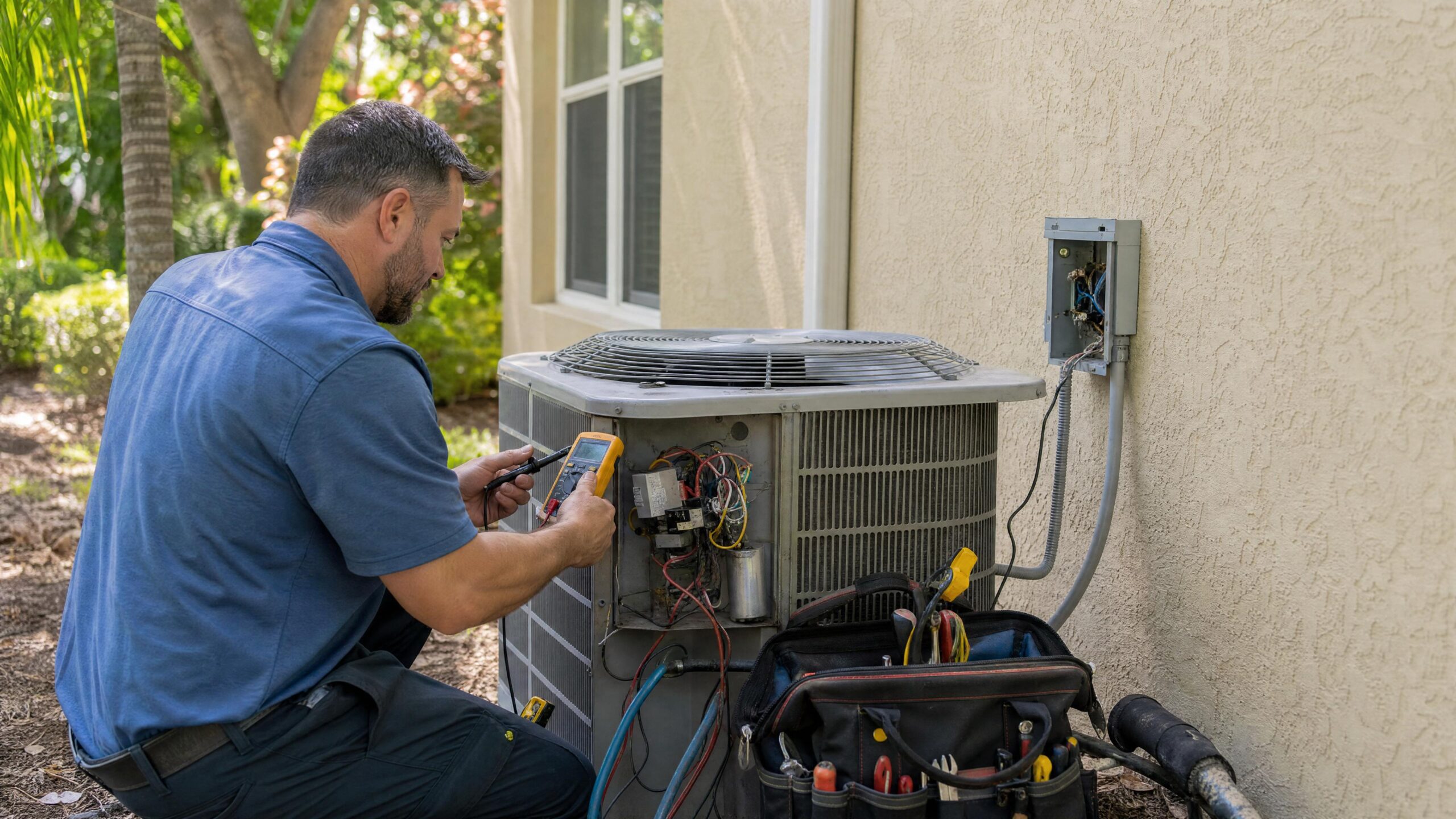
Under 8 years: Repair is typically the right choice unless the repair is catastrophically expensive. Modern systems should deliver reliable performance through their first decade with proper maintenance.
8-12 years: This is the gray zone. Factor in the other considerations in this guide. If the system has been well-maintained and the repair is straightforward, repair may still make sense.
12-15 years: Strongly consider replacement, especially if repairs are becoming more frequent. You’re entering the high-risk zone for major component failures.
Over 15 years: Replacement is almost always the better long-term investment. At this age, you’re not just fixing one problem—you’re delaying others that are right around the corner.
Efficiency Gains: SEER Ratings & Your Power Bill
Older AC systems in Florida typically operate at SEER 10-13. Modern high-efficiency systems reach SEER 16-20 or higher.
What This Means for Your Wallet
The efficiency difference directly impacts your cooling costs, which represent a major portion of Florida electric bills.
Upgrading from SEER 10 to SEER 16 can reduce your cooling costs by approximately 37%. Over a 15-year system lifespan, that efficiency gain can offset a significant portion of the replacement cost.
Key consideration: If your current system is rated SEER 13 or below and you’re facing a major repair, the energy savings from a new high-efficiency system should factor into your decision.
The R-22 Refrigerant Phase-Out: A Critical Factor
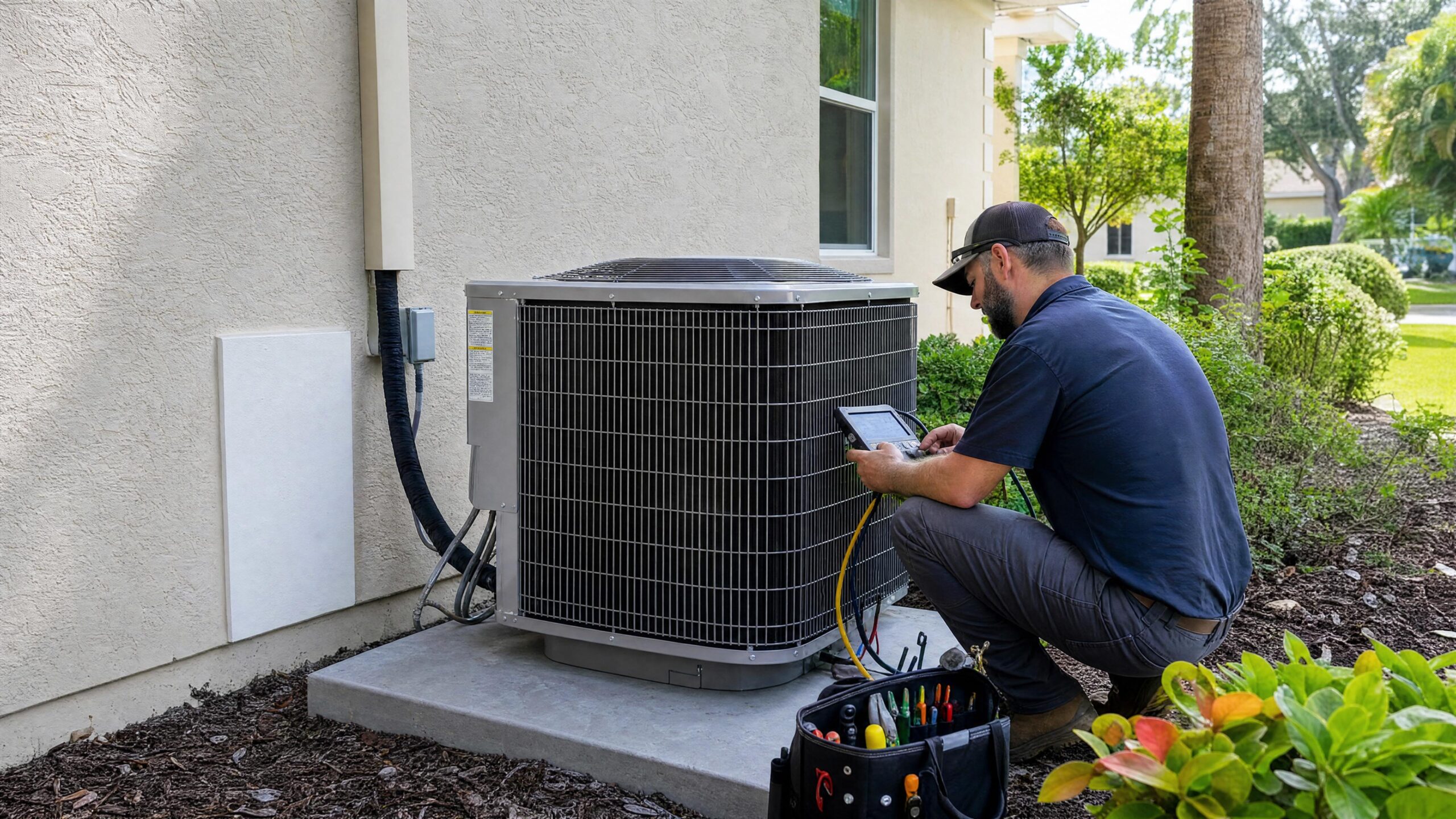
If your AC system uses R-22 refrigerant (also called Freon), you’re dealing with a phased-out refrigerant.
What You Need to Know
- R-22 production ended in 2020 due to environmental regulations
- R-22 prices have skyrocketed due to limited supply
- Refrigerant-related repairs are now much more expensive than they were five years ago
- R-22 will become increasingly scarce and costly in coming years
If your system uses R-22 and needs a refrigerant recharge or has a refrigerant leak that requires repair, replacement with a modern R-410A system is usually the better choice. You’re not just paying more today—you’re locking yourself into a dying technology with escalating costs.
Repair vs Replace AC in Florida: Decision Matrix
Use this framework to evaluate your specific situation:
| Factor | Repair | Replace |
|---|---|---|
| System Age | Under 10 years | Over 12 years |
| Repair Cost | Under 50% of replacement | Over 50% of replacement |
| Refrigerant Type | R-410A or newer | R-22 (Freon) |
| Recent Repair History | First significant repair | Multiple repairs in past 2 years |
| Energy Efficiency | SEER 14+ | SEER 13 or lower |
| Warranty Status | Under manufacturer warranty | Out of warranty |
| Expected Home Tenure | Selling within 2 years | Staying 5+ years |
If most factors fall in the "Replace" column, replacement is likely your best long-term decision.
Financing Options for AC Replacement in Florida
If budget is your primary concern, know that financing can make replacement more accessible than you might think.
Common Financing Options
Manufacturer Financing: Many AC manufacturers offer promotional financing through authorized dealers, sometimes including 0% interest periods.
HVAC Company Financing: Reputable HVAC companies often have relationships with lending partners and can help you explore payment plans.
Home Improvement Loans: Personal loans or home equity options may provide lower rates than credit cards for major home improvements.
Energy Efficiency Programs: Some Florida utility companies and local programs offer rebates or incentives for high-efficiency system upgrades. Check with your utility provider.
The key point: Don’t let upfront cost be the only factor. A financed replacement that eliminates ongoing repairs and reduces your monthly power bill may actually improve your monthly cash flow compared to repeated repairs on an aging system.
For more details on HVAC financing, visit our financing options page.
When Repair Is the Right Choice
Replacement isn’t always the answer. Repair makes good sense when:
- Your system is under 10 years old and this is the first significant repair
- The repair is minor (under $500-800) regardless of system age
- You’re under warranty covering the repair or parts
- The system has been well-maintained and shows no signs of other imminent failures
- You’re planning to sell your home soon and just need the system functional for the sale
When Replacement Is the Better Investment
Consider replacement when:
- The 50% rule threshold is exceeded
- Your system uses R-22 refrigerant and needs refrigerant-related repairs
- You’ve had multiple repairs in the past 2-3 years
- Your system is 12+ years old, especially in Florida’s harsh climate
- Your energy bills have been climbing due to declining efficiency
- You want warranty coverage and reliable cooling
Should You Repair vs Replace Your AC in Florida? Get an Honest Assessment
Every AC situation is unique. The right choice depends on your specific system, repair needs, home, and financial situation.
Hot 2 Cold Air Conditioning provides honest assessments and transparent recommendations. We’ll evaluate your system, explain your options clearly, and help you make the decision that’s right for your home and budget—whether that’s repair or replacement.
Call Hot 2 Cold Air Conditioning at 813-358-4591 or request service online.
Dispatch: 10918 Rodeo Ln, Riverview, FL 33579
Service area: Riverview, Tampa, Brandon, Apollo Beach, Valrico, Fish Hawk, Bloomingdale, and surrounding Hillsborough County communities.
How 2026 Changes the Repair vs. Replace Math in Florida
The core framework in this guide — the 50% rule, age thresholds, refrigerant type — remains sound. But two 2026-specific factors have shifted the repair vs. replace calculation meaningfully for Florida homeowners making this decision now, in peak summer.
R-410A Recharge Costs Are Significantly Higher in 2026
As of January 2025, new production of R-410A refrigerant was banned in the U.S. under the AIM Act. Existing supply can still be used for service and repairs, but wholesale prices have risen 40–60% compared to 2023 levels and continue trending up. For a Florida system that lost refrigerant to a leak this summer, the recharge cost in 2026 is meaningfully higher than what the same repair cost two or three seasons ago. If your system has lost refrigerant once, it will likely lose it again — slow coil or line-set leaks rarely self-resolve. A second recharge at 2026 pricing, on a system already 10+ years old, often pushes the decision firmly toward replacement when you run the full cost comparison.
The Double-Failure Summer Pattern
In August, a common pattern emerges: a homeowner had a repair in June — typically a capacitor or contactor — considered replacement but decided to wait, and is now facing a second failure in August, often something more expensive (compressor hard-start assist, refrigerant recharge, or a refrigerant leak repair). This is the predictable trajectory of a system entering end-of-life: small electrical failures first, larger mechanical failures next, with the intervals between failures compressing. If you’ve already spent money on this system this summer, include that amount in your total repair investment when applying the 50% rule. The threshold applies to cumulative repair spend versus replacement cost — not just today’s quote in isolation.
August-Specific Replacement Urgency
Tampa Bay’s cooling season extends through mid-October. September still hits 90°F+ on many afternoons. A system that is borderline in August — not failed, but struggling — is running its heaviest cumulative load of the year. Replacing now gives you a tested, warranted system for September and early October, and positions you for next cooling season without the anxiety of starting summer on equipment you know is declining. Fall is always the easier time to shop. But a system accumulating failures in August may not offer the luxury of a fall timeline.
Frequently Asked Questions: 2026-Specific Factors
I’ve already spent 0 on repairs this summer. Does that count toward the 50% rule?
It should factor into your decision, though the 50% rule is typically applied to the current repair quote against replacement cost. The more useful calculation for repeat-repair situations: add what you’ve spent this season to the current repair quote, then compare that total against a replacement estimate. If you’ve spent 0 and are now facing a ,200 additional repair on a system that would cost ,500 to replace, the combined ,000 in summer repairs is 31% of replacement cost — under the 50% threshold, but the trend matters as much as the ratio. A system needing ,000 in repairs in a single season is showing you where it’s headed. Apply the age factor alongside the cost math: a 13-year-old system with ,000 in repairs this summer is a different calculation than a 7-year-old system with the same spending.
My AC uses R-410A and lost refrigerant this summer. Should I repair or replace it in 2026?
It depends on the system’s age and the leak location. A system under 10 years old with a pinhole leak in an accessible, repairable location — properly repaired and recharged — can still have solid useful life ahead. A system over 12 years old with an evaporator coil leak is facing a repair whose cost has escalated significantly in 2026 due to R-410A pricing, and the coil will likely continue to degrade and lose refrigerant again. Ask the technician whether the leak is in a repairable location and get a written repair estimate before deciding. If the repair quote exceeds ,500 on a system over 12 years old, run a full replacement comparison before committing to the repair cost at 2026 refrigerant pricing.
Should I replace a 12-year-old AC?
Age alone isn’t the deciding factor, but a 12-year-old AC system in Florida is in the high-risk zone for major failures. If it’s running well, properly maintained, and hasn’t required significant repairs recently, you may get a few more good years. However, if it needs a major repair, replacement is usually the smarter investment. At 12 years, you’re repairing a system approaching the end of its typical lifespan.
How much does AC replacement cost in Florida?
AC replacement costs vary significantly based on system size, efficiency rating, installation complexity, and ductwork condition. System type (standard AC vs heat pump) also affects cost. A reputable HVAC contractor should provide a detailed estimate after evaluating your home’s specific needs. Request itemized quotes from multiple licensed contractors to ensure you’re getting fair pricing and appropriate equipment for your home.
Can I finance AC replacement?
Yes, AC replacement financing is widely available in Florida. Many HVAC companies offer financing options through lending partners, and manufacturers often provide promotional financing programs. Additionally, home improvement loans and home equity financing can be used for HVAC replacement. Financing can make replacement more affordable by spreading the cost over time, and monthly payments may be offset by energy savings from a more efficient system.
How do I know if my AC uses R-22?
Check the label on your outdoor AC unit. It will specify the refrigerant type. If your system was installed before 2010, it most likely uses R-22. Systems installed after 2010 typically use R-410A. If you’re unsure, any HVAC technician can identify your refrigerant type during a service call. Knowing your refrigerant type is critical when evaluating repair costs.
Is it worth repairing an AC with a refrigerant leak?
It depends on your system’s age and refrigerant type. If your system uses R-22 refrigerant and has a leak, replacement is usually the better choice due to R-22’s high cost and phase-out status. For newer systems using R-410A refrigerant, repairing a leak is often worthwhile, especially if the system is under 10 years old. The repair should include fixing the leak—not just recharging refrigerant—to avoid recurring costs.
What is a heat pump and should I consider it for replacement?
A heat pump provides both cooling and heating from a single system, making it an efficient option for Florida’s climate where heating needs are minimal. Modern heat pumps can be more energy-efficient than traditional AC systems with separate heating. If you currently use electric resistance heating or an older AC system, a heat pump replacement may provide year-round efficiency gains.