
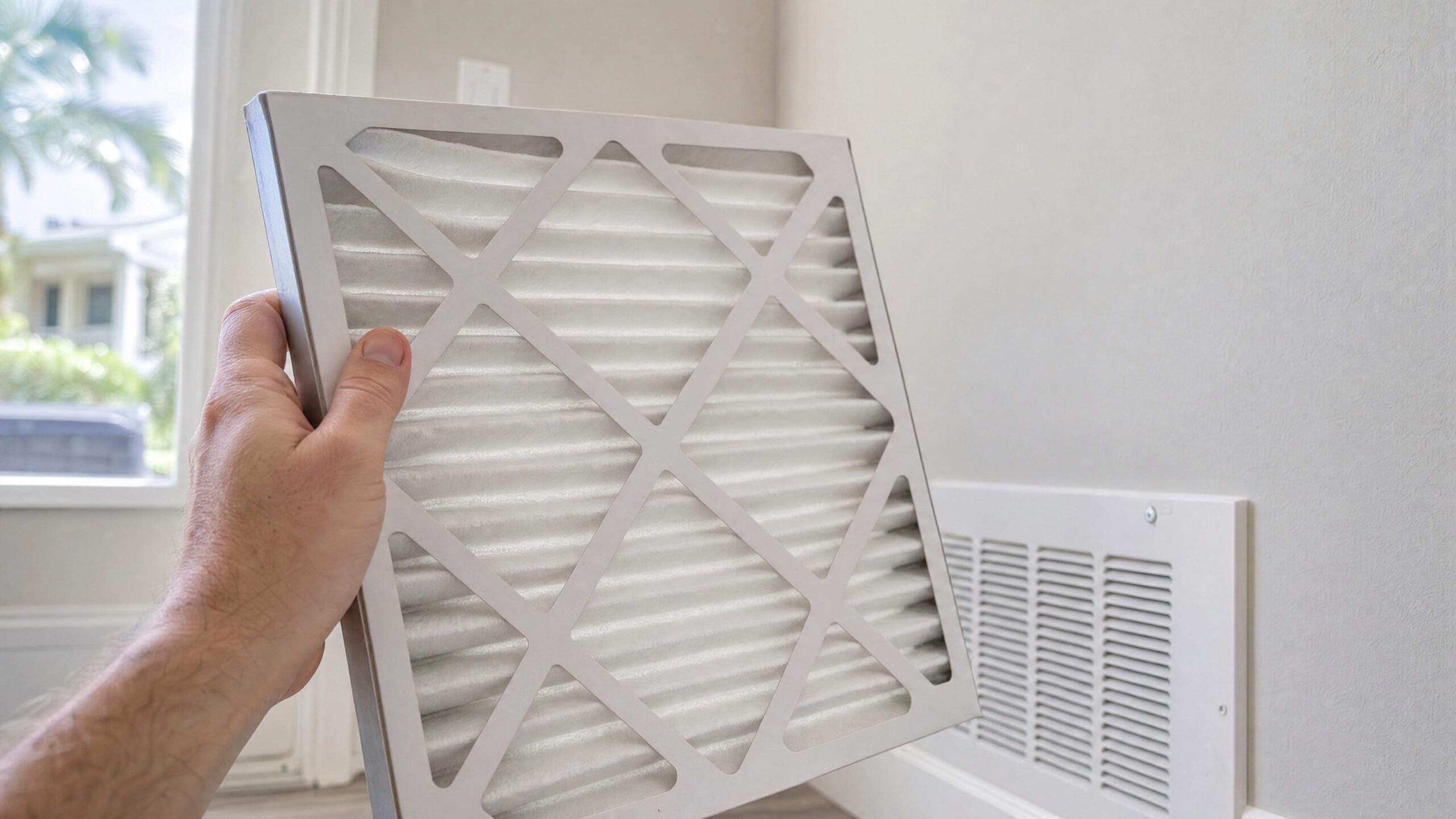
How Often to Change Your AC Filter in Florida
Florida’s heat, humidity, and year-round AC use make air filter replacement one of the most important maintenance tasks for homeowners. A clean filter protects your system, improves efficiency, and helps maintain indoor air quality. But how often should you actually change it?
The answer depends on filter type, household conditions, and runtime. This guide explains filter ratings, replacement schedules for Florida homes, and signs your filter needs attention now.
Licensed Florida HVAC Contractor: CAC1816786
AC Filter Types and MERV Ratings
Not all air filters are the same. Understanding filter types and MERV ratings helps you choose the right filter for your system and replace it on the correct schedule.
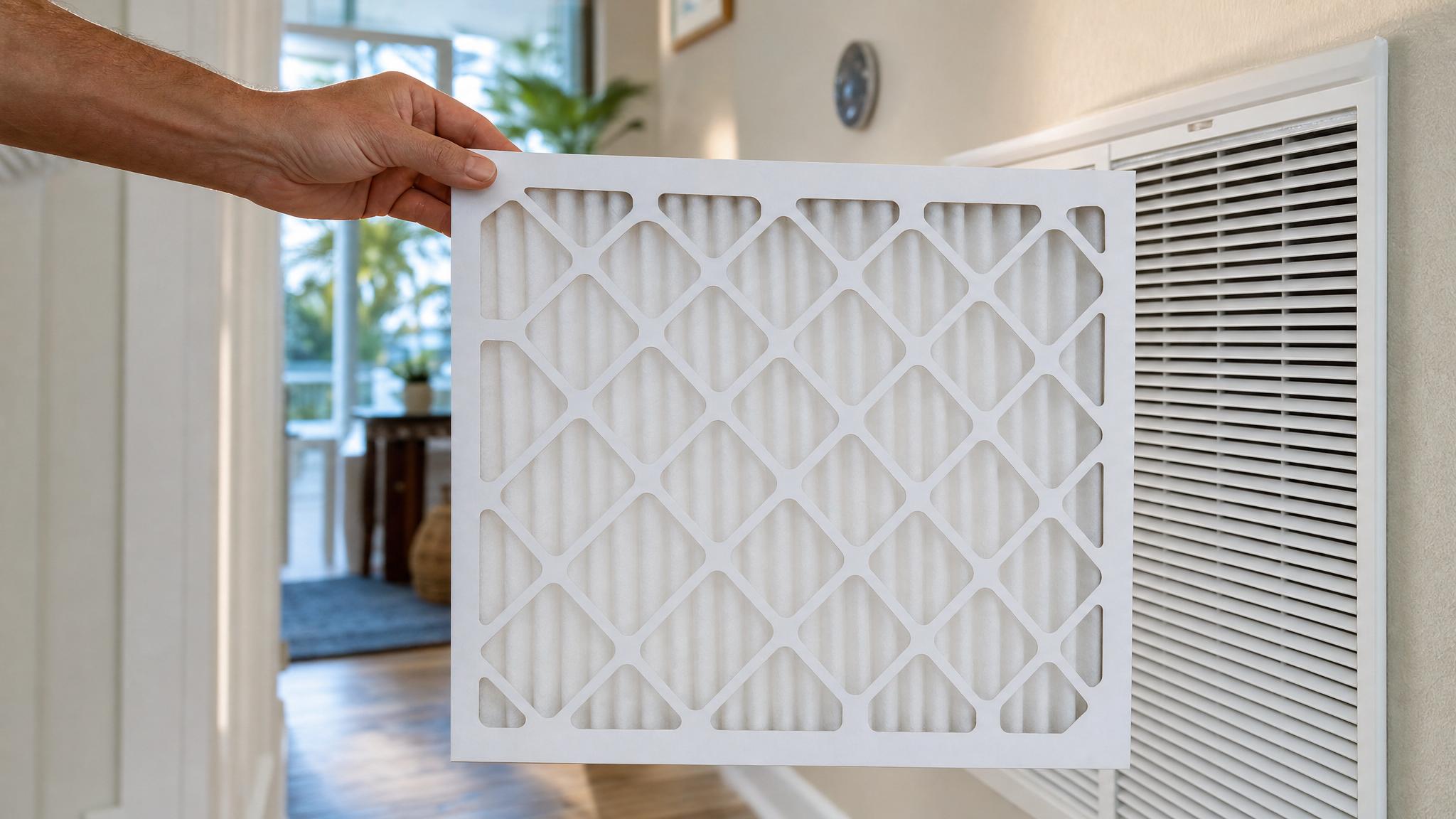
Fiberglass Filters (MERV 1-4)
These are the thin, inexpensive filters often included with systems. They catch large particles like dust and lint, but offer minimal air quality improvement. Fiberglass filters should be replaced monthly in Florida due to constant AC operation.
Best for: Basic system protection when air quality is not a primary concern.
Pleated Filters (MERV 5-13)
Pleated filters use folded synthetic material to capture smaller particles including pollen, mold spores, pet dander, and dust. Most Tampa Bay homes use MERV 8-11 pleated filters as a balance between filtration and airflow.
Best for: Most Florida homes, especially those with allergies or pets.
HEPA Filters (MERV 17-20)
True HEPA filters capture 99.97% of particles as small as 0.3 microns, including bacteria, viruses, and fine smoke. However, standard residential AC systems are not designed for HEPA filtration without modifications. Using a HEPA filter in a system not designed for it can restrict airflow and strain the blower motor.
Best for: Standalone air purifiers or systems specifically designed for HEPA filtration.
Electrostatic Filters
Washable electrostatic filters use static electricity to attract particles. While they can last for years if cleaned regularly, they typically offer less filtration efficiency than quality pleated filters. They also require proper cleaning and complete drying before reinstallation to prevent mold growth in Florida’s humid climate.
Best for: Homeowners willing to maintain a regular washing schedule.
Understanding MERV Ratings
MERV (Minimum Efficiency Reporting Value) measures how well a filter captures particles. The scale runs from 1 to 20, with higher numbers indicating better filtration.
- MERV 1-4: Catches large particles; minimal air quality benefit
- MERV 5-8: Captures dust, pollen, and mold spores; adequate for most homes
- MERV 9-12: Better filtration including finer dust and pet dander; recommended for allergy sufferers
- MERV 13-16: Commercial-grade filtration; may restrict airflow in standard residential systems
- MERV 17-20: HEPA-level filtration; requires specialized equipment
For Florida homes, MERV 8-11 typically offers the best balance. Higher ratings can restrict airflow if your system is not designed for them, which can reduce efficiency and strain components.
Check your system manual or ask during your next maintenance visit before upgrading to a higher MERV rating.
How Often to Change AC Filters in Florida
Florida’s climate and year-round AC operation mean filters get dirty faster than in other regions. General replacement schedules depend on filter type and household conditions.
Standard Replacement Schedule
- Fiberglass filters (MERV 1-4): Every 30 days
- Pleated filters (MERV 5-8): Every 60-90 days in normal conditions; every 30-45 days with pets or allergies
- High-efficiency pleated (MERV 9-12): Every 60-90 days; check monthly
- Electrostatic filters: Wash monthly, inspect for wear every 6 months
Replace More Frequently If:
- You have pets (especially multiple pets or shedding breeds)
- Anyone in the home has allergies or respiratory conditions
- You keep windows open frequently
- You live near construction, farmland, or busy roads
- You run the AC constantly during Tampa Bay’s hot months
- Your home has high dust levels or poor attic/crawlspace sealing
Tampa Bay Month-by-Month Filter Check Calendar
Florida’s seasons affect how fast filters load up. Here is a practical check schedule based on Tampa Bay conditions:
- January – February: Dry season, lower humidity, reduced AC runtime. Check every 45–60 days. Systems running heat strips instead of the compressor accumulate less debris.
- March – April: Pollen season begins. Oak, pine, and grass pollen peak in March and April — some of the heaviest pollen months in the Tampa Bay area. Check every 30 days; replace if visibly loaded. Allergies worsen fast in homes with saturated filters during this window.
- May – June: Humidity climbs before the rainy season fully arrives. AC runtime increases sharply as temperatures push into the upper 80s and 90s. Check every 3–4 weeks. This is when the transition from “check monthly” to “check every 3 weeks” matters most.
- July – September: Peak rainy season. High humidity, maximum AC runtime, and late-afternoon storms mean systems run heavily and cycle moisture constantly. Check every 2–3 weeks, especially with pets or allergy sufferers. A filter clogged in August in a Tampa Bay home can freeze a coil within days.
- October: Runtime begins to taper. Humidity drops as the rainy season ends. Check every 30–45 days through mid-month, then extend if the system is running less.
- November – December: Cooler weather, reduced runtime. Monthly checks are adequate for most homes. Homes with gas heat strips running frequently still accumulate some dust; check at least once per month.
The calendar above is a guide, not a guarantee. Households with multiple pets, smokers, or occupants with respiratory conditions should check more frequently regardless of the month.
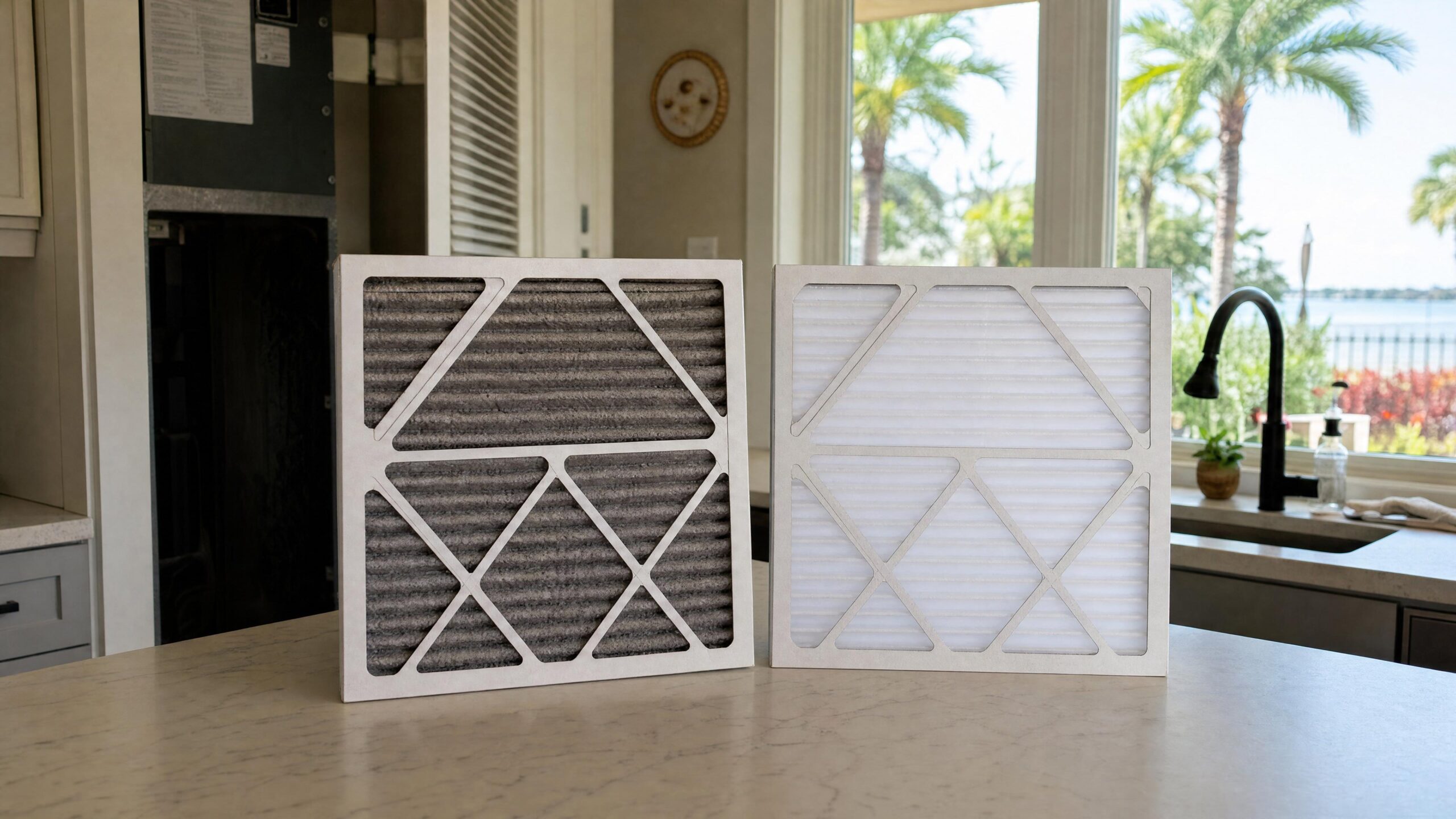
Why Changing Your AC Filter Matters in Florida
Regular filter changes are not just about air quality. A dirty filter affects your entire AC system and can lead to expensive problems.
System Efficiency and Energy Bills
A clogged filter restricts airflow, forcing your AC to work harder to move air through the system. This increases energy consumption and raises your electric bill. In Florida’s long cooling season, a dirty filter can add hundreds of dollars to annual energy costs.
System Lifespan and Repairs
Restricted airflow from a dirty filter can cause the evaporator coil to freeze, strain the blower motor, and overheat components. These issues lead to breakdowns, reduced system lifespan, and costly repairs that could have been prevented with regular filter changes.
Indoor Air Quality
A saturated filter can no longer trap particles effectively. Dust, pollen, mold spores, and other allergens circulate through your home instead of being captured. For Florida homeowners dealing with high humidity and outdoor allergens, clean filters are essential for maintaining healthy indoor air.
Learn more about improving indoor air quality in Tampa Bay homes.
Signs Your AC Filter Needs Immediate Replacement
Do not wait for the calendar if you notice these symptoms:
- Visible dirt and debris on the filter surface — If you cannot see light through the filter when held up, it is too dirty.
- Reduced airflow at vents — Weak airflow often means a clogged filter is restricting circulation.
- Longer cooling cycles — The system runs longer to reach target temperature because airflow is restricted.
- Increased dust around the home — A saturated filter cannot trap particles effectively.
- Allergy or respiratory symptoms worsen indoors — Poor filtration allows allergens to circulate.
- Ice forming on refrigerant lines — Restricted airflow can cause the evaporator coil to freeze.
- System shuts off unexpectedly — Overheating from poor airflow can trigger safety shutdowns.
If you see ice on the refrigerant lines or the system is shutting off frequently, turn cooling off and schedule a diagnostic visit. These symptoms indicate a serious airflow restriction that needs professional attention. Review our guide on what to check when your AC is not cooling for more troubleshooting steps.
How to Change Your AC Filter
Changing an air filter is a simple task most homeowners can handle. The filter is typically located in the return air vent or at the air handler unit.
Step-by-Step Filter Replacement
- Turn off the AC at the thermostat — Not required but reduces dust circulation during replacement.
- Locate the filter — Check the return air vent (usually a large rectangular grille on a wall or ceiling) or the air handler cabinet (indoor unit).
- Remove the old filter — Note the size printed on the edge (e.g., 16x25x1, 20x20x1).
- Check the airflow arrow — The new filter has an arrow indicating airflow direction. It should point TOWARD the air handler (into the ductwork).
- Install the new filter — Slide it into place with the arrow pointing the correct direction.
- Mark your calendar — Set a reminder to check the filter in 30 days.
Do not run your AC without a filter. Even a few hours of operation without a filter allows dust and debris to coat the evaporator coil, reducing efficiency and potentially causing damage.
Can You Use a Higher MERV Rating?
Higher MERV ratings capture smaller particles, which sounds better. But residential AC systems are designed for a specific airflow range, and filters that are too restrictive can cause problems.
Before upgrading to MERV 13 or higher, check with an HVAC professional. If your system’s blower motor and ductwork cannot handle the increased resistance, a higher MERV filter can:
- Reduce airflow below safe levels
- Strain the blower motor and shorten its lifespan
- Cause the evaporator coil to freeze
- Increase energy consumption
- Trigger safety shutdowns
For most Tampa Bay homes, MERV 8-11 pleated filters provide excellent filtration without airflow issues. If air quality is a major concern, consider a standalone air purifier or ask about whole-home air purification systems during your next AC tune-up.
Filter Changes Are Part of Preventive Maintenance
Changing your filter regularly is the most important maintenance task you can do yourself. But professional maintenance covers the components you cannot safely inspect or clean.
An AC tune-up includes:
- Cleaning the evaporator and condenser coils
- Checking refrigerant pressure and inspecting for leaks
- Testing electrical components (capacitors, contactors, wiring)
- Lubricating moving parts and inspecting belts
- Clearing and treating the condensate drain line
- Verifying thermostat calibration and system cycling
Regular professional maintenance combined with monthly filter checks gives your system the best chance of lasting through Florida’s demanding cooling season without breakdowns.
Learn more about Hot 2 Cold’s preventive maintenance programs.
Frequently Asked Questions
What MERV rating should I use for my Florida AC?
Most Florida homes do well with MERV 8-11 pleated filters. These ratings capture pollen, mold spores, dust, and pet dander without restricting airflow in standard residential systems. Before using MERV 13 or higher, confirm that your system can handle the increased resistance. Check your system manual or ask during a maintenance visit.
Can I use HEPA filters in my home AC system?
Most residential AC systems are not designed for true HEPA filtration (MERV 17-20). HEPA filters create significant airflow restriction that can strain the blower motor, reduce efficiency, and cause the evaporator coil to freeze. If air quality is a major concern, consider a standalone HEPA air purifier or ask about whole-home air purification systems designed to work with your AC.
Why do I need to change AC filters more often in Florida?
Florida homes run AC systems nearly year-round, moving far more air through the filter than homes in seasonal climates. Add high humidity, outdoor pollen, mold spores, and frequent summer storms, and filters get dirty much faster. A filter that lasts 90 days in a northern state may need replacement in 30-45 days in Tampa Bay.
What happens if I don’t change my AC filter?
A clogged filter restricts airflow, which makes your AC work harder, increases energy bills, and can cause the evaporator coil to freeze. Over time, restricted airflow strains the blower motor and other components, leading to breakdowns and shortened system lifespan. A dirty filter also stops trapping particles effectively, reducing indoor air quality.
Can a dirty filter cause my AC to freeze?
Yes. Restricted airflow from a clogged filter prevents warm air from passing over the evaporator coil. The coil temperature drops, and condensation freezes into ice. If you see ice forming on refrigerant lines or the indoor unit, turn cooling off immediately, replace the filter, and let the system thaw completely before turning it back on. If ice returns after thawing, schedule a diagnostic visit — the problem may be more than just the filter.
What if a dirty filter leads to a bigger AC repair?
If a clogged filter has already contributed to a frozen coil, blower problem, or a larger repair decision, the next step depends on system age, repair cost, and overall condition. We can inspect the system, explain the repair-versus-replace tradeoff, and help you review financing options if replacement makes more sense.
Should I use washable or disposable filters?
Both can work, but disposable pleated filters (MERV 8-11) typically offer better filtration and convenience for most Florida homes. Washable electrostatic filters can last for years but require thorough monthly cleaning and complete drying before reinstallation. In Florida’s humid climate, a damp filter can promote mold growth. If you choose washable filters, commit to the cleaning schedule and have a spare to use while the washed one dries completely.
How do I know what size filter to buy?
The filter size is printed on the edge of your current filter, usually in a format like 16x25x1 or 20x20x1. The numbers represent length x width x thickness in inches. Bring the old filter to the store, or measure the filter slot if you do not have an old filter. The filter must fit snugly in the slot — gaps allow unfiltered air to bypass the filter and enter your system.
Is it safe to run my AC without a filter temporarily?
No. Even short operation without a filter allows dust and debris to coat the evaporator coil and enter the blower motor. This reduces efficiency and can cause damage. If you are out of filters, it is better to leave the AC off until you can install a new one. Running without a filter for even a few hours can create problems that take professional cleaning to fix.
What is the best AC filter for Florida humidity and mold?
For Florida homes, a pleated MERV 8–11 filter is the best balance of filtration and airflow for most standard systems. High humidity accelerates mold spore counts in the air year-round, and a quality pleated filter captures mold spores before they reach the evaporator coil. Avoid letting any filter sit past its service interval in summer — a saturated filter in July can accumulate biological growth faster than in drier climates. If mold has been a recurring issue inside the air handler, ask about UV germicidal lights, which are installed near the coil and reduce biological buildup between service visits without affecting airflow.
How does July and August heat affect filter life in Tampa Bay?
July and August 2026 are the most demanding months for AC filters in Tampa Bay. Afternoon storms push outdoor pollen, grass clippings, and moisture-laden air into the system. Systems running near-continuously to hold interior temperatures during peak heat cycle far more air through the filter than during any other part of the year. A MERV 8 pleated filter that lasts 60–90 days in January may need replacement in 3–4 weeks during August. Check your filter every two to three weeks from July through September — do not wait for the calendar reminder. If you notice reduced airflow at any vent during summer, the filter is the first thing to check before calling for service.
Why Tampa Bay Homeowners Trust Hot 2 Cold for AC Maintenance
Knowing when to change your filter is the first step. Having a licensed contractor handle the maintenance your filter cannot is the second. Here is why Tampa Bay homeowners have called Hot 2 Cold Air Conditioning since 2013:
- Licensed Florida HVAC contractor: CAC1816786 — verified, insured, and accountable.
- No-commission technicians: Our technicians are paid to diagnose correctly, not to sell. You get an honest assessment of what your system actually needs.
- Diagnosis before repair: We inspect before we recommend. If a filter change and a tune-up solve the problem, that is what we tell you.
- Same-day service available: When a dirty filter has caused a frozen coil or a system shutdown in Tampa Bay heat, waiting is not an option. We offer same-day appointments for urgent calls — especially important for households with young children, elderly occupants, or medical equipment.
- Serving Hillsborough County since 2013: Over a decade of maintenance calls across Riverview, Tampa, Brandon, Apollo Beach, Valrico, Fish Hawk, and Bloomingdale.
If you are not sure whether a filter issue has progressed into a larger AC problem, call before it gets worse. Early diagnosis on a frozen coil or a straining blower is far less expensive than a system failure on a Tampa Bay August afternoon.
My AC is running constantly in August — does that mean I need to change the filter more often?
Yes. The filter replacement schedule in this guide is based on typical Florida conditions, but August represents the most demanding end of that range. When your AC runs nearly continuously to hold interior temperatures during Tampa Bay’s peak heat weeks, it moves far more air through the filter each day than during any other time of year. A MERV 8 pleated filter that holds up for 60 days in January or February may load fully in 3–4 weeks during August. If your system is running 16 or more hours per day — which is normal for many Tampa Bay homes in August 2026 — treat the July–September period as a 2-to-3-week check window rather than a monthly calendar reminder. Check the filter by holding it up to light: if you cannot see light through the material, replace it regardless of when it was last installed. A clogged filter during August peak heat can produce a frozen coil within a matter of days in the Tampa Bay heat-humidity combination. See our guide on AC freezing up in Florida for what to do if that happens.
Can skipping a filter change in August lead to an expensive AC repair?
Yes — this is one of the most preventable causes of summer AC repairs in Tampa Bay. Here is how the chain works: a clogged filter restricts airflow → restricted airflow causes the evaporator coil temperature to drop below freezing → ice accumulates on the coil and refrigerant lines → the frozen coil insulates itself and the system stops cooling → by the time the homeowner notices, the coil has been running in abnormal pressure conditions long enough to stress the compressor. In Florida’s high-humidity August conditions, this progression can happen faster than in drier climates. A $20 filter replacement is the least expensive maintenance decision a homeowner controls. If a clogged filter has already caused a freeze-up or triggered a drain line backup, see our guide on clogged AC drain lines in Florida — a frozen coil that thaws can also overflow the condensate pan if the drain line is already partially restricted.
August filter check reminder: If you have not checked your filter in the last 3 weeks during Tampa Bay’s peak summer heat, check it today. Do not wait for the calendar reminder. Early identification of a loaded filter is far less expensive than the service call that follows a frozen coil or shutdown.
Indoor Air Quality and Summer Humidity in Florida
Why Florida Summer Makes IAQ More Important
Florida homes in June through September face a combination of conditions that make air filtration especially important: high outdoor humidity (regularly 80–90% RH), closed windows, and AC systems running 10–14 hours per day.
When humidity is high and your home stays closed up, indoor air quality can degrade faster than in cooler climates. A properly rated and frequently changed filter addresses the most common indoor air quality threats:
- Mold spores — Florida summer humidity creates ideal conditions for mold. MERV 8–11 filters catch mold spores before they circulate through your home.
- Dust mite allergens — Florida’s warm, humid interiors support higher dust mite populations. Pleated filters rated MERV 8+ capture allergen particles effectively.
- Pollen — Even with windows closed, pollen enters through doors and on clothing. A clean filter traps it before recirculation.
- Pet dander — Pets spend more time indoors during summer heat. Higher dander loads mean filters clog faster and need more frequent replacement.
Humidity Control and Your Filter
Your AC system dehumidifies the air as it cools. A dirty or clogged filter restricts airflow across the evaporator coil, which reduces the system’s ability to remove moisture. The result: your home feels muggy even when the temperature is correct.
If your home feels humid at the thermostat set temperature, check the filter first. A fresh filter restores proper airflow and dehumidification capacity.
Signs your filter is affecting indoor air quality:
- Home smells musty even with AC running
- Allergy symptoms worse than usual indoors
- Visible dust on supply registers
- Home feels humid even though AC is running
- Filter looks gray or you cannot see light through it
Filter MERV Ratings for Florida Summer IAQ
| Filter Type | MERV | Best for |
|---|---|---|
| Basic fiberglass | 1–4 | System protection only; minimal IAQ benefit |
| Standard pleated | 5–8 | Good for most homes; catches pollen and dust |
| High-efficiency pleated | 9–12 | Best for allergy sufferers and Florida summer |
| HEPA equivalent | 13–16 | Maximum filtration; check system compatibility |
For most Tampa Bay homes, MERV 8–11 is the right balance between IAQ improvement and airflow. Going above MERV 13 can restrict airflow on systems not designed for it and reduce efficiency.
Schedule AC Maintenance in Tampa Bay
Regular filter changes protect your system, but professional maintenance catches problems before they turn into expensive repairs. Call Hot 2 Cold Air Conditioning at (813) 358-4591 or request service online.
Dispatch: 10918 Rodeo Ln, Riverview, FL 33579
Service area: Riverview, Tampa, Brandon, Apollo Beach, Valrico, Fish Hawk, Bloomingdale, and surrounding Hillsborough County communities.